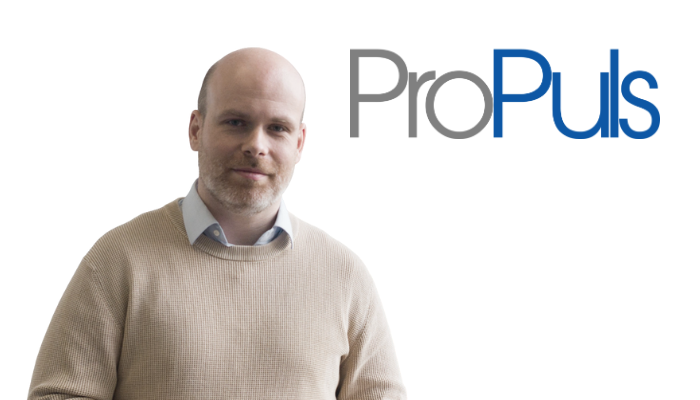
After earning his PhD in Materials Science from the University Politehnica Timișoara (Romania) and the Westphalian University of Applied Sciences (Germany) in 2019, Norbert joined the Hydrogen Technologies group of the German university, where he worked on developing PEM electrodes before moving into project coordination and funding activities. Since 2024, he’s been part of ProPuls on a tandem track, where he now leads hydrogen projects and is besides involved in funding acquisition, dissemination and management activities.
What was your original motivation to become a researcher/project manager?
Since I joined the university, I’ve been fascinated by the academic world. It’s a place full of wonderful, intelligent people who work with great passion on a wide variety of topics, and I knew I wanted to be part of that. I think I followed the natural path; starting with hands-on lab work, then moving into coordination, funding acquisition, teaching, and management. Now, at ProPuls, I have the chance to experience the industrial side of research projects. This is a new perspective that broadens my understanding of the research landscape.
What is your (main) research area today?
Today I have unfortunately no time to do my own research in the lab anymore. But I’m lucky to be part of some wonderful and talented teams working on all sorts of exciting projects: from non PGM electrodes to original and creative ideas like hydrogen compression, scaling up our AEM electrolysis stacks and even direct sea water electrolysis.
What is the main focus of your team in SWEETHY?
The ProPuls role revolves around the in-situ tests, from the establishment of the reference cell setup, to delivering single cell test systems up to the final direct seawater test bench. We are happy that advanced materials from tier one research institutes around the EU will be tested on our platforms. Of course, that also puts pressure on us — but we’re hopeful (and determined!) to live up to those expectations.
Could you describe your favourite moment/satisfaction when working for the project and – more in general – for your organisation?
EU projects are something special. The partners are all top-tier institutes or companies in their countries, and the level of creativity and knowledge they bring to solving complex challenges is truly admirable. The online meetings (even though there are many!) are never boring — the presentations are always engaging, and the discussions lively. Over time, you also build real friendships with some partners, and it’s great to know that at any conference, there’ll always be someone to share a coffee with, have a good chat, and maybe even spark a new idea together.
How do you expect SWEETHY results will affect your organisation and the energy storage sector?
For us, the result is quite clear. By the end of the project, we’ll have gained deeper knowledge in an emerging technology, and we hope that the prototype will eventually help expand our product portfolio in the foreseeable future. More broadly, we believe that popular science dissemination will highlight — especially for coastal regions — a particular opportunity for green energy production. At the same time, the more scientific publications will certainly bring refreshing ideas in the community and catalyze future explorations that could be beneficial for scientists and companies interested in this field.