European Symposium on Durability Issues in Low-Temperature Water Electrolysis
A Marcus Wallenberg Symposium
Stockholm, Sweden
October 13-15, 2026
About the Symposium
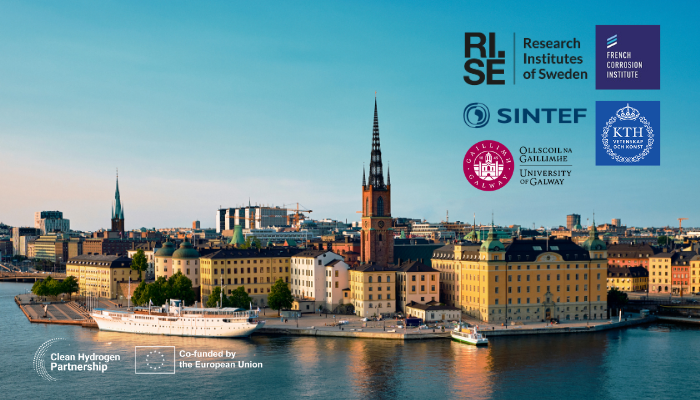
RISE, the French Corrosion Institute, SINTEF, KTH Royal Institute of Technology, and the University of Galway are organizing the European Symposium on Durability Issues in Low-Temperature Water Electrolysis (a Marcus Wallenberg Symposium), to be held in Stockholm, Sweden, on October 13–15, 2026.
The symposium aims at providing a dedicated forum for exchange and discussion among academia, research institutes, and industry active in the field of water electrolysis.
Scope - Abstract
Contributions are welcome in the form of oral presentations and poster sessions. Early-career researchers (PhD candidates and postdoctoral researchers) are strongly encouraged to participate.
The scientific scope covers, but is not limited to, the following topics:
- Technologies: alkaline, PEM, AEM, membrane-less, seawater, low-grade water electrolysis as well as photo-electrochemical water splitting.
- Degradation and durability of components: catalysts, electrolyte membranes, porous transport layers, bipolar plates, water feed pipes, and other balance-of-plant and stack components…
- Degradation modes affecting electrolysis performance: corrosion, hydrogen embrittlement, electrolyte membrane thinning, catalyst coarsening or dissolution, and impurities in the water feed…
- Durability solutions: anti-corrosion coatings, surface treatments, catalyst dissolution mitigation…
- Fundamental aspects of degradation mechanisms: electrochemical degradation mechanisms and kinetics, multiscale numerical modeling…
- Methods to investigate degradation and durability: in operando, in situ, and ex situ techniques, as well as accelerated stress tests…
- Durability of materials for next-generation water electrolysis: PFAS-free electrolyte membranes, non-critical raw materials, and non-platinum group materials…
- Sustainability assesment, Life-cycle and techno-economic analyses: benefits of reducing critical raw materials and the potential for recycling…
Call for late poster abstracts
• Registration fee: €250
• A limited number of poster slots is available.
• Submissions will be handled on a first-come, first-served basis, after acceptance by the Organising Committee.
• Deadline: September 15, 2026 (or earlier if all poster slots have been filled).
• The poster abstract template can be downloaded here.
• The abstract can be submitted via symposium2026@ri.se.
Venue
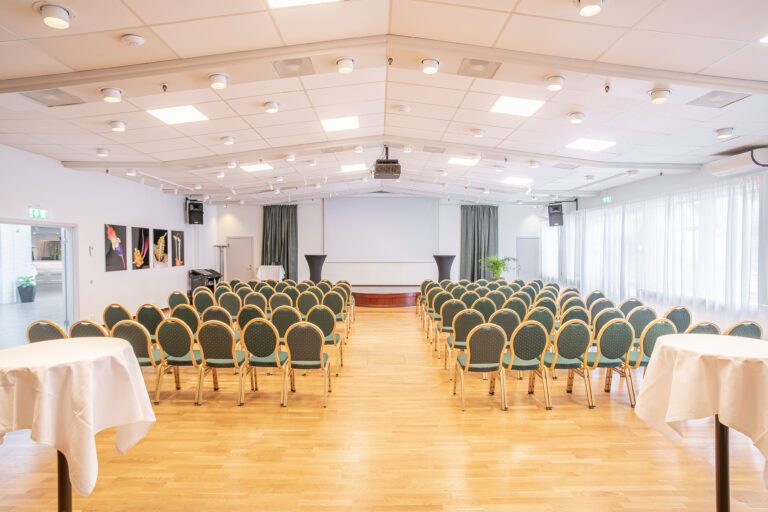
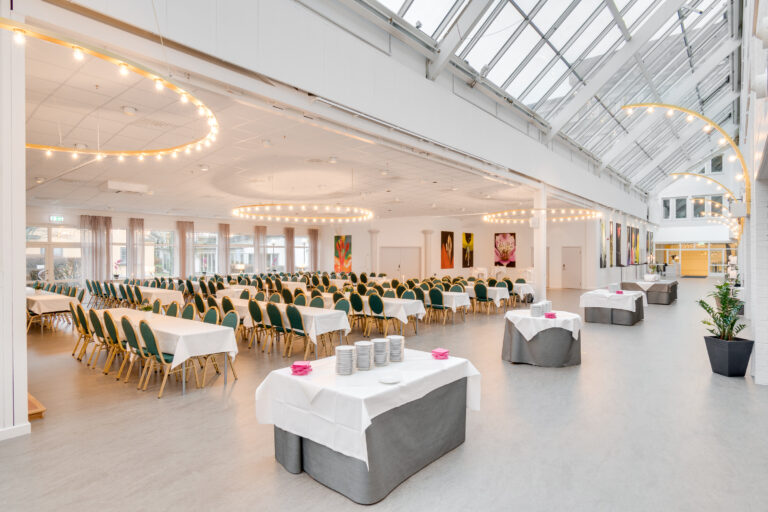
The symposium venue (Lustikulla Conference Centre, Liljeholmsvägen 18, Stockholm) is located solely 10 minutes from the core of historical centre of Stockholm (Gamla stan) and the central railway station by subway (lines T13 and T14, stop: Liljeholmen).
Organization Committee
This symposium is a joint initiative of the water electrolysis projects SWEETHY, PROTIS, UNICORN, PUSH and ANEMEL.
- Olesia Danyliv, Researcher, RISE, Coordinator of the SWEETHY project
- Michel Prestat, Senior Researcher, French Corrosion Institute, Coordinator of the PROTIS project
- Patrick Fortin, Senior Researcher, SINTEF Industry, Norway, Coordinator of the UNICORN project
- Björn Eriksson, Assistant Professor, KTH, Sweden, PUSH project
- Pau Farràs, Associate Professor, University of Galway, Coordinator of the ANEMEL project
Registration
Registration is now closed.
-
Early-bird registration deadline: June 18
-
Early-bird registration fee: €150 (excl. VAT)
-
Late registration fee: €250 (excl. VAT)
Participation will be confirmed by the organizing committee upon acceptance.
The registration fee includes the right to participate at the symposium, to network during the lunch breaks provided on 13-14/10 and during the coffee-breaks provided on 13-15/10.
Programme
The final version of the scientific programme is now available!
Keynote speakers
Dr. Antonino Aricò is the director of the Institute of Advanced Technologies for Energy “Nicola Giordano” in Messina, Italy, of the National Research Council (CNR-ITAE). His main research activities focus on electrochemical energy research with an emphasis on low-temperature water electrolysis, fuel cells and organic fuel synthesis.
His keynote presentation will deal with the durability of Aquivion® membranes in PEM water elctrolyzers, a research work carried out within the European project ADVANCEPEM.
Dr. Norbert Kazamer is a senior researcher working at both Propuls GmbH and the Westphalian University of Applied Sciences in Gelsenkirchen, Germany. His work spans the development of advanced electrolysis systems and membrane electrode assembly materials for PEM and AEM technologies, combining industrial implementation with application-oriented research. His keynote presentation will dive into the topic of electrodeposited anode architectures for AEM water electrolysis, highlighting how catalyst-integrated porous transport layer concepts can enhance performance while addressing degradation mechanisms, contaminations, and recovery strategies.
David Aili is an Associate Professor working at the Department of Energy Conversion and Storage of the Technical University of Denmark.
His main research interests focus on advanced electrochemical materials and polymer electrolytes for sustainable energy conversion technologies with an emphasis on ion-exchange membranes, alkaline water electrolysis, fuel cells, bipolar membranes, and electrochemical CO₂ conversion.
His keynote presentation will address novel polymer backbone chemistry of durable ion-solvating membranes for alkaline water electrolysis.
Merit Bodner is an Associate Professor at the Institute of Chemical Engineering and Environmental Technology in Graz University of Technology in Austria. Her research primarily centers on improving the understanding, detection, and prevention of degradation in low-temperature water electrolysers and fuel cells. A particular focus is on advanced materials for more efficient and environmentally compatible energy-conversion technologies.
Her keynote presentation will be dedicated to the detection of degradation of novel and commercially available ionomers and membranes in the framework of the European project SUPREME.
Dr. Sebastian Proch is Principal Engineer within the Surface Research group at Strategic Research of the Swedish manufacturer of advanced alloys Alleima in Sandviken, Sweden. His research focuses on materials and components in low temperature electrochemical flow devices (water electrolyzers, fuel cells, and redox flow batteries).
His keynote presentation will deal with the impact of ionic decoupling on the selection of materials for porous transport layers, bipolar plates and their coatings in PEM water electrolysis. This work was carried out within the European project UNICORN and internal Alleima research projects in cooperation with National Laboratory of the Rockies (NLR), Golden, CO, USA.
Sponsors
Main Sponsor
The organizers gratefully acknowledge the financial support of the Marcus Wallenberg Foundation for International Scientific Collaboration as our main sponsor.
Gold Sponsors
We are proud to announce ProPuls GmbH, Zahner Scientific Instruments, COMSOL Inc., Duramea, Redox.me and Gamry as Gold Sponsors and Exhibitor of the Symposium.
Silver Sponsors
We are proud to announce Nuoryon as Silver Sponsor of the Symposium.