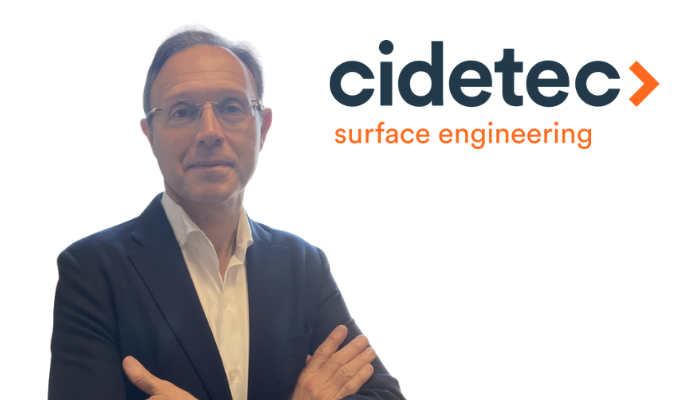
Dr. Francisco Alcaide Monterrubio holds a PhD in Chemistry, specialising in Physical Chemistry and Electrochemistry, from the University of Barcelona, Spain. He has over 30 years of experience in energy conversion and storage, including fuel cells, hydrogen technologies, batteries and related electrochemical systems, covering both research and technological applications. He also has extensive experience in managing projects at national, European and international levels.
Since joining CIDETEC in 2003, he has held several positions of responsibility. He is currently Hydrogen Technologies Team Leader and Principal Investigator at CIDETEC. Within SWEETHY, he is responsible for coordinating CIDETEC’s contributions, in collaboration with other members of the research team, with a focus on electrocatalysts for seawater electrolysis, corrosion risk and protection, and membrane electrode assemblies.
What was your original motivation to become a researcher/project manager?
My motivation to become a researcher is purely vocational. Since an early age, I have been fascinated by chemical and electrochemical phenomena: understanding how they work, sharing that knowledge with others, and helping turn it into progress for society.
What is your (main) research area today?
I currently work on H₂ & FCs technologies, particularly on green hydrogen production through electrolysis, with the aim of improving performance and reducing costs. My work applies SSbD principles and integrates AI methods into the development of materials and components for electrolysers, supporting their role as a leading pathway for industrial decarbonisation and clean technologies.
What is the main focus of your team in SWEETHY?
CIDETEC will contribute at several levels: developing novel PGM-free electrocatalysts and electrodes for the HER and OER through chemical synthesis and electrodeposition methods, capable of operating in the harsh conditions created by seawater; conducting local electrochemical analyses to assess the performance of anti-corrosion coatings; selecting the most suitable materials for the MEA; and performing single-cell testing.
Could you describe your favourite moment/satisfaction when working for the project and – more in general – for your organisation?
One of the most rewarding aspects of this project has been the opportunity to work with top-level partners, whom we had known for years, but with some of whom we had not yet collaborated on a joint project. Moreover, the topic of direct seawater electrolysis represents a significant scientific and industrial challenge, and being able to contribute to it is highly rewarding both for me and for CIDETEC.
How do you expect SWEETHY results will affect your organisation and the energy storage sector?
SWEETHY is expected to strengthen CIDETEC’s position in green hydrogen and advanced electrolysis technologies, particularly through the development of corrosion-resistant materials, PGM-free electrocatalysts and AEMEL electrolyser components. For the energy storage sector, SWEETHY can contribute to more decentralised, sustainable and water-efficient hydrogen production, reducing dependence on freshwater resources.