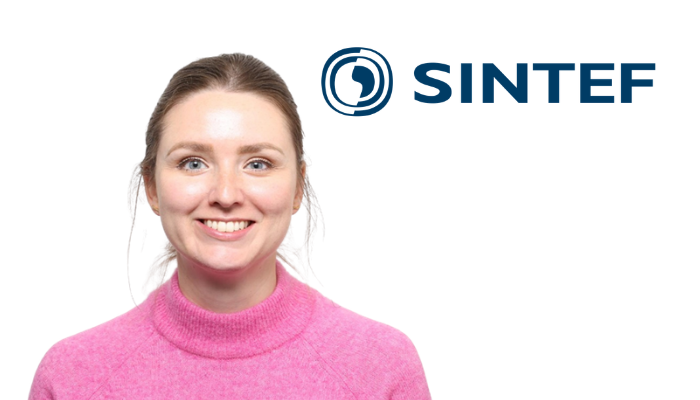
Kristine Bly is originally from Canada and holds an academic background in geography and natural resources management. She currently works at SINTEF Industry in the Sustainable Energy Technology department, within the Operations Research and Economics group in Trondheim, Norway. There, she leads the sustainability assessment work packages in the SWEETHY project.
What was your original motivation to become a researcher/project manager?
My main motivation for becoming a researcher was my deep interest in sustainability, and the belief in the importance of bridging the social and natural sciences. I am fascinated by the ways environmental challenges shape societies and communities, and I wanted to contribute to a more holistic understanding of these relationships. This interdisciplinary curiosity inspired me to pursue a path where I could examine how human behaviour, social structures, and environmental systems influence one another, and how research can guide the development of more sustainable and resilient societies.
What is your (main) research area today?
My main research area focuses on integrating qualitative methods into the sustainability assessment of new and emerging technologies. I am particularly involved in projects related to hydrogen and other green technologies, where I examine how social perspectives, stakeholder experiences, and community impacts can enrich and contextualize technological sustainability evaluations. In addition, I contribute to work on Social Life Cycle Assessment (sLCA), including within the SWEETHY project.
In this context, qualitative insights play an important role in complementing quantitative results, offering a deeper understanding of context‑dependent social impacts that cannot be captured through quantitative analyses alone.
What is the main focus of your team in SWEETHY?
The main focus of our work package team in SWEETHY is to carry out a holistic sustainability assessment that meaningfully integrates qualitative research with Environmental Life Cycle Assessment (eLCA), Social Life Cycle Assessment (sLCA), Techno‑Economic Analysis (TEA), and industrial symbiosis approaches. Through these methodologies, we aim to identify where environmental, economic, and social impact findings point in the same direction, and where they diverge. This parallel interpretation helps us uncover specific trade‑offs (for example between cost‑optimal process designs and potential community concerns), synergies (such as industrial symbiosis opportunities that can reduce both environmental burdens and operational costs), and context‑dependent hotspots that may influence the feasibility or acceptability of seawater electrolysis.
Could you describe your favourite moment/satisfaction when working for the project and – more in general – for your organisation
Two moments stand out as particularly satisfying for me in SWEETHY. The first was engaging with the technical partners to better understand the challenges and opportunities of seawater electrolysis. Gaining a clearer picture of the technological complexities allowed me to tailor our qualitative work in a way that felt relevant and aligned with the needs of the consortium. The second moment was completing our deliverable “Stakeholder perspectives on the SWEETHY electrolyser system”, and seeing the technical partners take interest in the findings. Their recognition of the value of the social and contextual perspectives was very rewarding. Specifically, this experience reflects what I appreciate about working at SINTEF. Our motto “technology for a better society” emphasises the importance of bringing human and societal perspectives into technological research. Contributing to a project where this integration is not only encouraged but truly valued reinforces why this work feels meaningful to me.
How do you expect SWEETHY results will affect your organisation and the energy storage sector?
For SINTEF, SWEETHY reinforces the value of combining multiple assessment methodologies (qualitative research, eLCA, sLCA, TEA, and symbiotic thinking). It is something we can continue to develop as a methodological strength across future projects. More broadly, by highlighting potential trade-offs, synergies, and societal implications early in the innovation process, the project supports more responsible and robust decision-making.